SILVIO CICCHI:Male Age:54 A restaurant-trained Executive Pizza Chef, he is the author of upcoming book of pizza recepy: “PIZZA e FANTASIA“, you can download it for free registering on this site. He currently resides in Spinetoli (ITALY) with his cats and dogs. Specialized in Business start up – Pizza dove – Pizza courses – Art of pizza.
After having dealt with the article on the gluten and pizza, Today we will see the behavior of the gluten in the dough pizza.
I am very happy that many of you have written to me thanking me for doing clarity on gluten, because once we clear this concept, we can move on to see how it behaves the gluten in our pizza dough.
The gluten pizza
The gluten in pizza
The gluten mesh may be more or less strong depending on the type of flour which we used for the dough, holds in its alveolus gases that are formed during leavening (check out this article if you have not already done) and makes it swell and then increase in volume.
We will certainly have to try to stretch the ball of your pizza, and note that it is very elastic, too elastic, This happens when the gluten has not finished the process of relaxation, that is not yet completed the process of leavening. Many of us will certainly have to try to roll the ball of the dough for pizza and find enormous difficulties in doing so, having the feeling of working with an elastic, This happens when the dough has not yet completed the process of leavening. Giving the right to the dough resting time, we can spread the ball with no problem, and even during cooking the gluten will be able to keep gases.
Conclusion:
Each mix has its time to rise, that can be influenced by several factors: the temperature of the environment in which we live, flour, water, the type of yeast, the amount of salt in the dough. Let us not forget that during the rising process, takes the maturation of the dough, process described in this article, that are going to affect the lightness and digestibility of our finished product.
Share Found this interesting article? Share on your network of contacts Twitter, on your wall on Facebook or simply press “G ” to suggest this result in Google searches. Disseminate content that are relevant to this blog helps grow. Thank You!
Today I'll talk about Gluten trying to do it in a very simple way.. This word, in recent times has become part of our everyday vocabulary, part of (merit) goes to those suffering from some disorder of food intolerance, up to the celiac disease can not tolerate gluten absolutely. And to think that we find commonly in all leavened products from the oven.
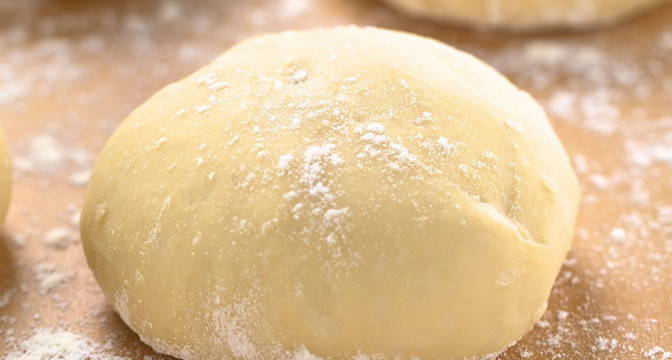
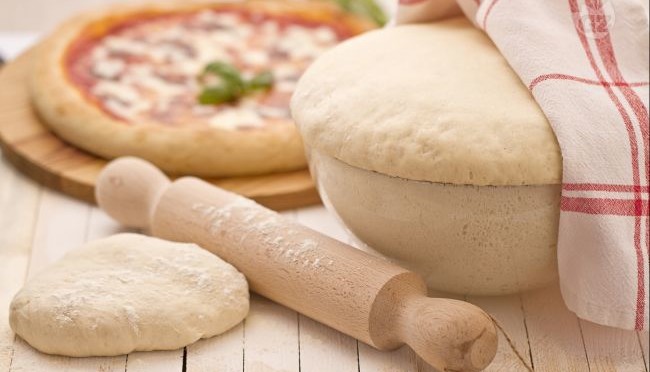
Dough for pizza
GLUTEN AND PIZZA
When we begin to knead flour and water, you begin to form the lattice glutinico. We find the gluten in all flours, even if in a different way.
Each type of flour has a different protein value (Gliadine and Glutenine) that upon contact with the water to rise to a protein complex called precisely gluten. Gluten form a lattice in our dough that will be the backbone of the mix that supports it and it does not do it rise deflate. The reticle is visible if we look at the interior of a slice of bread, where we can observe the alveolus or lattice that is formed.
Slice of bread
The percentage of gluten that contains a flour that is mixed with water as the unit of measure the "strength"Which is shown in all packs of flour with the symbol The. Then, the greater the value of W, the greater the strength of that flour.
The flour for biscuits average has a W ranging from 130 to 170
Flour for pizza has a W ranging from 240 (pizza quick rise), to a W higher than the 300 (for long leavening also 24 hours in the fridge)
Panettone and Pandoro to support its own weight (eggs,butter, flour,,water) need of a flour with W ranging up to 450.
The classic packs of flour in the supermarket do not report this value (The) then choose a flour where it is clearly indicated "flour for pizza"
It might be helpful, also the reading of protein values shown in the pack of flour:
Protein values up to 10% are index of flour for pastries, cookies or tarts.
Protein values ranging dall'11-13% are index flours suitable for the pizza, bread and all the buns
Values above 14%: Flour for bakery products that require a large structure.
Now that we know what gluten, let's see how it behaves in our dough, but this I will explain in the next article.
Share Found this interesting article? Share on your network of contacts Twitter, on your wall on Facebook or simply press “G ” to suggest this result in Google searches. Disseminate content that are relevant to this blog helps grow. Thank You!
The yeast for pizza is formed by microorganisms "Saccharomyces cerevisiae" that entered in'Dough of flour and water, and then cause the fermentation leavening, namely the transformation of sugars into carbon dioxide.
The yeast for the pizza
We can find it on the market in two different forms:
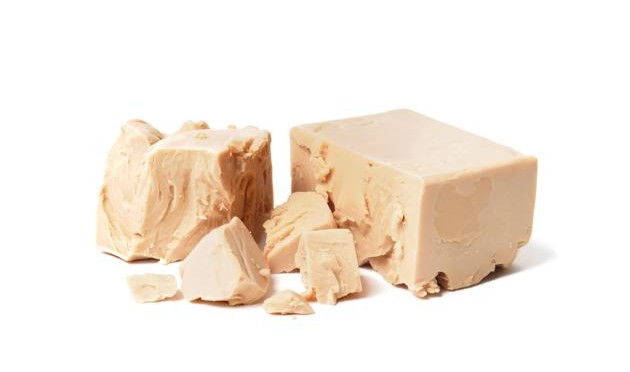
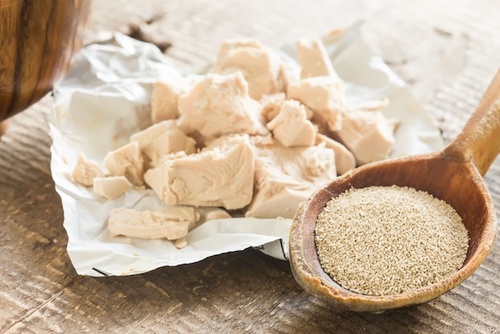
In the form of cubes called fresh yeast, short expiry, strictly to be kept in a refrigerator, This type of yeast is used in all pizzerias, responds quickly because the microorganisms are already active in its interior.
Granules, called dry yeast. You buy in supermarkets. Is nothing but the fresh yeast which is subjected to the process of dehydration. This type of yeast has a deadline very long since in the absence of water microorganisms are paused. To use it, we have to add it in warm water for a few minutes.
For the right amount to use we could say that 1 gram of dry yeast equivalent to 3 grams of fresh yeast.
For all the housewives or all enthusiasts who want to make pizza at home we give advice: Use fresh yeast. So doing shortened times Proving and maturation of your dough.
To those who have much time available we suggest you use the yeast or natural for kneading, perhaps coupled with a pinch of yeast, to have absolute certainty that the dough will rise. The results obtained will be superior in terms of richness of flavor and fragrances. In this article explains how to make your home the natural yeast or yeast.
Amount of yeast to use:
Whatever your recipe that followed, I warn: Are you using too much yeast.
After mixed and prepared thousands and thousands of pizzas in my life, I assure you that for our classic dough 4 people who can viewin this article, are needed 1,5 grams. I understand that you trust, I agree with you that you have to do it quickly rise to bake and eat it, but the use of a higher dose could compromise your final product, giving the pizza a strong smell of yeast. Better to use a little yeast and give the right to the dough rising time, maybe until it has doubled in volume.
Some of my colleagues uses a stick of 25 grams to prepare 600 pizza in pizzeria, leaving the dough to rise in the refrigerator for more than 24 ..lascio hours ... you draw conclusions.
So to all those who will compete in making pizza at home, counsel to prepare the dough in the morning, then use it in the evening for dinner. You will have a final product perfectly leavened and mature to perfection.
Share Found this interesting article? Share on your network of contacts Twitter, on your wall on Facebook or simply press “G ” to suggest this result in Google searches. Disseminate content that are relevant to this blog helps grow. Thank You!
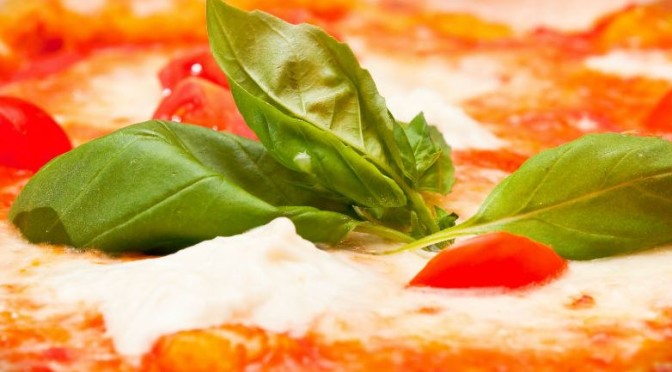
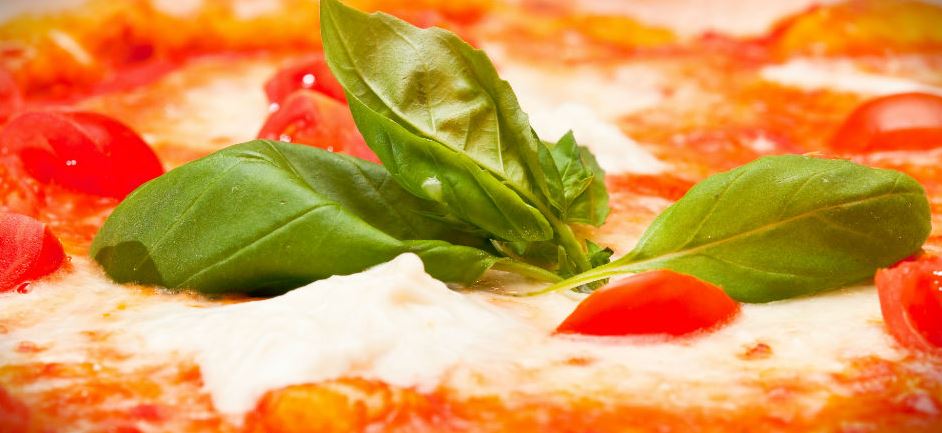
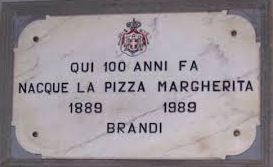
History tells us that the pizza maker Raffaele Esposito who worked in Naples in the pizzeria "Peter ... and Just So"(1780) the same pizzeria still exists today and is called "Pizzeria Brandi", was called by the official of the Palace of Capodimonte, where they were visiting the King of Italy Umberto I and his wife Margaret of Savoy to prepare a pizza for them. The queen looked with favor on the pizza that just took his name. It was a very simple pizza, and had the three colors of the Italian flag. The green basil, the white of the mozzarella and red tomato.
The pizza Margherita History and Recipe
Targa Birth of Pizza MargheritaQueen Margherita of Savoy
The Pizza Margherita Pizza is the most popular in the world, every pizzeria proposes its own version.
Today we will prepare the classic pizza Margherita, There are many variations, but each has its own personal way to prepare, this is my recipe.
200 grams of peeled tomatoes
Preparation time: 30 my
Cooking time: 20 my
Rising time 1 hour or until the dough is not doubled in volume.
Preparation:
Take the risen dough and roll it on a baking sheet greased.
Season with peeled tomatoes, oil, sale e basilico
Cook for about twenty minutes 220 degrees.
Just the pizza margherita is almost ready, remove from oven and season with diced mozzarella and basil and bake for others 5 minutes.
Friends: The biggest asset I possess. Found this interesting article? Share on your network of contacts Twitter, on your wall on Facebook or simply press “G ” to suggest this result in Google searches. Disseminate content that are relevant to this blog helps grow. Thank You!
PIZZA IN BRAZIL
The pizza is the world's most popular Italian dish., During my travels in Brazil, I could not help but notice how this dish is popular in this land. Much of this credit goes to all the Italian immigrants from 1800 onwards they moved to this beautiful country. Today pizza has become part of the Brazilian culture, and is a food habitual, and in many traditional recipes, you made some interesting variations of ingredients to adapt to different cultures and local tastes.
I found online an interesting article written by the magazine Super interesting that he says that in Brazil there are currently 50.000 pizzerias, half of which appears to be in the state of Sao Paulo, and seguire Rio de Janeiro, Rio Grande do Sul, Minas Gerais and Bahia.
As in any other part of the world, every city has its preferences, and below a chart to show the tastes of the people Brazilian.
The Pizza in Brazil
Graph The pizza in Brazil
Summary data:
Most of the nation prefers a thin paste
The edge is an average of 2,6 cm
On average are used 275 grams of pizza mozzarella
On average are added 10 olives on each pizza.
Only 5% consumer, asks a sweet pizza.:
We observe now the preferences for each city:
Sao Paulo
The Pizza Margherita (mozzarella pizza)
The Pizza pepperoni (pepperoni pizza)
The Pizza "Portuguese" with chicken and catupiry (pizza "Portuguese" is with boiled eggs, pepperoni, onions and corn)
La São Paulo pizza: São Paulo is the only city where a good mozzarella dominates the palate, despite being the only place where the pepperoni pizza without cheese is. In addition to, only in São Paulo is the preference for pizza dough of medium thickness.
Some pizzas a bit 'exotic: pizza al sushi, pizza to cabbage and butter
Porto Alegre
The Pizza pepperoni (pepperoni pizza)
The Pizza "Portuguese"
The Pizza with chicken hearts, Neapolitan pizza and pizza margherita
The inhabitants of Porto Alegre are "gauchos" also in pizza: between the demands are more typical pizza with little hearts and chicken pizza with strogonoff.
The pizzas more exotic: pizza with veal cutlet, con skirt steak (a cut of beef) and carpaccio
River
Rio de Janeiro
Pizza pepperoni (pepperoni pizza)
Pizza margherita
Pizza "Portuguese"
Brazilians like sweets and this is borne out by statistics on pizza, while nationally requests sweet pizzas amounted to 5% of total orders, the Rio de Janeiro Arrivano al 15%, in some pizzerias even to 30%
Belo Horizonte
Pizza margherita
Pizza con pollo and catupiry
Pizza pepperoni (pepperoni pizza)
Region famous for the production of cheese, pizza in Minas Gerais is preferanza with dairy
The most original: pizza with melted cheese and Parma ham
Salvador de Bahia
Pizza "Portuguese"
Pizza con pollo and catupiry
Pizza margherita or pepperoni (pepperoni pizza)
Not one of the top 3 but then the pizzas more traditional preference for Bahian goes for pizza with prawns, fish or seafood.
The more exotic: pizza with cod frayed, egg and fresh coriander.
Friends: The biggest asset I possess. Found this interesting article? Share on your network of contacts Twitter, on your wall on Facebook or simply press “G ” to suggest this result in Google searches. Disseminate content that are relevant to this blog helps grow. Thank You!
The process of proving it can be summed up in three different categories: Chemical leavening, physical and biological leavening leavening.
We are used to seeing the yeast in different ways, in the form of dough, dried granules, or as sourdough.
What is the difference between different types of yeast?
Leavening is a process that allows the formation of gas within a dough, it does increase in volume both before, both during cooking.
Let's see how these processes occur.
PROVING PHYSICS
The puff pastry, produced with the process of leavening physical
This technique is widely used in confectionery. Questo tipo di lievitazione avviene grazie alla dilatazione termica dell’impasto durante la cottura. Products that contain inside egg whites are shining examples: the egg white mixed dough, thanks to the protein structure, manages to retain the air inside; while cooking the air bubbles remain trapped in the mesh structure of the protein re-inflating the sweet. Another example of this type of leavening is given by the puff pastry, where layers of fat such as butter and margarine are stacked in layers of dough. In cooking, the water vapor that is formed between the layers browsed is restrained from fat, creating empty areas within the product.
PROVING CHEMISTRY: YEAST CHEMICAL POWDER
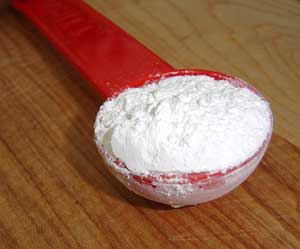
Baking powder
This type of leavening, is used in many bakery products especially in the professional and home cakes. The function of this yeast is to produce carbon dioxide during cooking, re-inflating the dough. Il lievito chimico è un composto in polvere formato prevalentemente da bicarbonato di sodio unito a un elemento acido che produce anidride carbonica durante la cottura. The first baking powders were created at the end of industrially 1800. Un altro tipo di lievitazione chimica è rappresentata dal bicarbonato d’ammonio o ammoniaca per dolci che è utilizzato nella preparazione di biscotti particolarmente friabili. The downside of this type of yeast is given precisely by the smell of ammonia which should be eliminated in the cooking following the right timing.
PROVING BIOLOGICAL: BREWER'S YEAST AND YEAST MOTHER
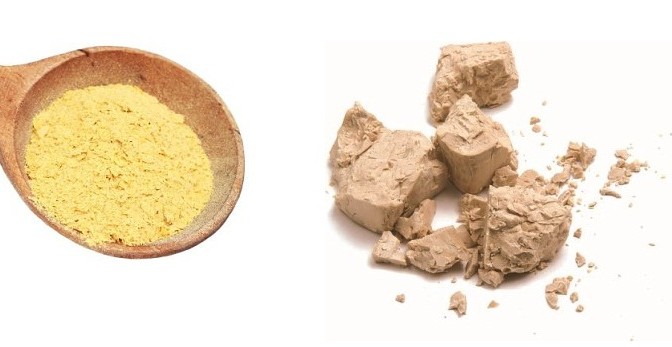
Dried yeast and diced
Leavening organic produce carbon dioxide through mechanisms of alcoholic fermentation that occur at the cellular level; i due principali agenti lievitanti sono il lievito compresso e il lievito naturale o lievito madre. The mechanisms of biological leavening were known since ancient times, When mixtures of water and flour were rested developing yeast which then in cooking rigonfiavano product. In 1930 was isolated the first yeast and performed an industrial production. Il lievito compresso si presenta sia in forma di panetto sia sotto forma di granuli disidratati. Il nome corretto è Saccaromyces Cerevisiae (da cerevisia, beer, in latino) and is a single-celled fungus that reproduces by budding.
Commonly called brewer's yeast perché in passato si ricavava da depositi che si formavano durante la fermentazione dei fusti di birra, today is produced with a compound from molasses; subsequently, through industrial processes, the yeast is compressed in cakes.
Dehydrated: The same yeast is dehydrated by reducing moisture and obtaining the granules of dry yeast.
Il Saccaromyces Cerevisiae è un fungo che inizia a riprodursi in presenza di ossigeno: This occurs thanks to the presence of air incorporated during the steps of mixing. Out of oxygen, the fungus triggers a mechanism of fermentation which produces ethyl alcohol and the part of carbon dioxide that is used to re-inflate the alveolar and doughs, before and during cooking.
Yeast
Il lievito naturale o pasta madre è un importante processo della lievitazione biologica. Was used in baking long before the yeast, the sourdough is a mixture of water and flour, left to ferment at room temperature, develops colonies of yeasts and lactic acid bacteria that reproduce and, in the mixing phase, have power leavening. The leavening process is equal to that of the yeast: alcoholic fermentation with gas production that create volume and alveoli in the cooked product. Unlike the compressed yeast, con il quale ha in comune la presenza del Saccaromyces Cerevisiae, sourdough develops inside multiple colonies of yeasts and lactic acid bacteria: the latter is an important difference between the compressed yeast and sourdough, in quanto la loro fermentazione sviluppa profumi e sapori particolari molto ricercati nel campo della panificazione. The higher acidity present in naturally leavened dough also allows a longer shelf life of the product, or a delay in the staling of the same.
Per il sito web della tua azienda, rivolgiti a: S.C. Agenzia di web Marketing: www.silviocicchi.com
Friends: The biggest asset I possess. Found this interesting article? Share on your network of contacts Twitter, on your wall on Facebook or simply press “G ” to suggest this result in Google searches. Disseminate content that are relevant to this blog helps grow. Thank You!
Last night we went out for pizza, tonight I have not slept a wink, I could not digest. How many of us, alas, were found in this situation, or has heard someone complaining that way?
Dough come to maturity.
Digest the pizza? Everything depends on the degree of maturation of the dough
The rise is one of the most important steps in the preparation process of 'pizza dough or any product from leavened bakery. We all know what the leavening: The mixture begins to swell, increases in volume, the same leavening continues even during the process of Cooking, forming on the inside of the bubbles that make our pizza lighter.
What influences the leavening?
temperature
THE rising time
The salt
The water
Without this premise on rising, let's dispel a common Taboo: The Digestibility of a pizza, not dependent on the leavening, but another important process, which is called Maturation.
Aging: The flour is mainly composed of starch, which are complex sugars. At the contact with the water, enzymes of the flour are activated by attacking starches and reducing them to simple sugars: will serve as food for the yeast and will be more easily assimilated by our body. The combination of flour and water also develops the gluten, ie the protein network that serves to give structure to the dough. The reticle is attacked by other enzymes which have the function of transforming the proteins into amino acids, easier to digest. So our pizza will prove to be well digested when our digestive system will find the dough cooked simple elements that have already been treated and reduced by enzimi.Tutto this process is called Maturation.
Conclusion: Any kind of dough is prepared by placing the right amount of yeast, giving it the right time of rest to allow the maturation of work properly.
The placement on the search engines for this site, is constantly monitored and maintained by S.C. Web marketing agency: www.silviocicchi.com
Friends: The biggest asset I possess. Found this interesting article? Share on your network of contacts Twitter, on your wall on Facebook or simply press “G ” to suggest this result in Google searches. Disseminate content that are relevant to this blog helps grow. Thank You!
Which flour to use for pizza, desserts and homemade pasta?
Which flour to use for pizza dough and homemade desserts?
During the preparation of our food we happen very often to ask which flour used to prepare cakes and pizza dough at home. Cooking at home, is back in fashion thanks to the economic crisis! Part of the credit also goes to the many television programs in cooking and culinary books on the market.
Which flour to use for pizza, desserts and homemade pasta?
As we all already know, the pizza dough can be soft, soft, friable or spongy: these characteristics vary essentially depending on the type of flour used, or, rather, from the mixture of flour.
The pizzas, focaccia, and bakery specialties typically, may appear in a different way according to their own choice of flour for processing. Indeed, besides water, oil, salt and the yeast we use to the dough, the flour is in fact a star ingredient in the preparation of pizza.
Do not underestimate that the leavening, l'ambiente, the oven temperature and the type of cooking are factors that weigh heavily on the success of the final product.
Flour type 00, 0, 1 and 2
As we all know, from the milling of durum wheat semolina and you get the caster; instead, when we grind the wheat, we have as final product a white flour, particularly suitable for the preparation of bread and cakes. The white flour differs depending on the degree of sifting is that the machining process consisting in the separation of the flour from the bran.
White flour type 00: capable of sifting equal to 50% (ideal for batters and cakes)
White flour type 0: capable of sifting equal to 72% that there be an excellent product for bread, pizza, buns and many other leavened products.
Flour type 1: capable of sifting of 80%
Flour type 2: capable of sifting of 85%
Fine flour: which is a very fine powder of wheat, which is obtained from the innermost part of the grain and soft. Flour that is used in the production of confectionery, qualitatively superior in terms of gluten.
Wholemeal flour: after his grinding, This flour does not undergo further refining processes. And 'itself a great alternative to flour 0, in the preparation of doughs rustic, but also has properties to satiate and regularize our intestines, thanks to the great amount of fibers contained in it.
The choice of flour.
All this introduction I think it is essential to have a general idea about the various ITPI flour commercially. Generally, the mixture which prepare for the pizza, is made from different mixtures of flour type 0 and 00 to which should be added to the water, salt, yeast and any fat or oil. For all those who want to obtain a rustic, want to add a piece of whole wheat flour, paying close attention to rising times, that for wholemeal flour turn out to be much longer than the doughs with white flours.
Our pizza will be of higher quality when we're going to use flour made from organic products, which have not been treated with pesticides or other chemicals. This consideration also applies to all other foods that we commonly use in our homes or in the workplace.
Summary:
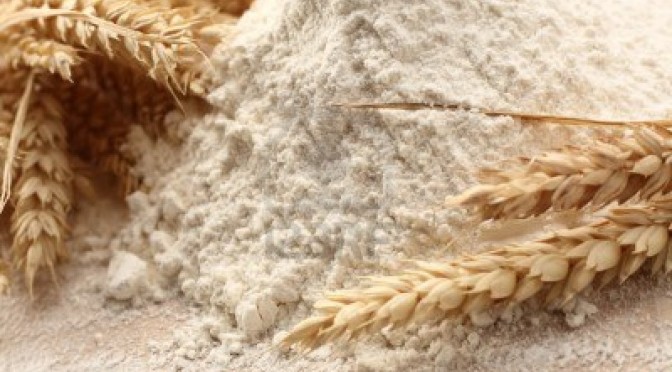
Flour for pizza
Ingredient for the production of pizzas, depending on the flour used you will get a soft dough, soft, friable or spongy
Types of flour
Type of flour
White flour type 00
White flour type 0 (ideal for pizzas)
Flour type 1
Flour type 2
Fine flour: (ideal for sweet pastry)
Wholemeal flour (regulates the intestine and satisfies)
Degree of sifting
50%
72%
80%
85%
The choice of flour for pizza
There is no single type of flour for the preparation of pizzas. There are mixtures characterized by:
Flour type 0 and 00: dough soft and fluffy
Flour type 0 and whole wheat flour: dough thicker, aromatic. → attention: rising times longer
Wheat flour and semolina: dough less bloated
Wheat flour and spelled flour
Wheat flour and oatmeal
Wheat flour and almond flour: sweet dough
Wheat flour and spices: sweet dough and more energy
Flour for pizza and celiac disease
Absolute prohibition of consuming pizzas mixed with wheat flour (for coeliacs). Possible mixtures with certified gluten-free flours
Friends: The biggest asset I possess. Found this interesting article? Share on your network of contacts Twitter, on your wall on Facebook or simply press “G ” to suggest this result in Google searches. Disseminate content that are relevant to this blog helps grow. Thank You!
At what temperature to cook the pizza. To make our pizzas "special", it takes quality ingredients, some knowledge and some advice. Sometimes, unfortunately, this is not enough, if you are not familiar with the characteristics and potential of the oven that is used.
Then, before starting it would be appropriate to read these tips and learn some tricks to get even at home excellent pizzas.
The secrets of pizza: the oven
We assume that all the pizza professionals are already aware of the temperatures of cooking pizza: about 300-320 degrees for an electric furnace or gas, and around the 450 degrees for the wood stove, then this article will deepen the topic of pizza baking for those who ventured to do it at home, with the classic home oven.
I ovens, cooking gas, which have a maximum temperature of 250 ° C, can be of two types: vented and unvented. If your oven is not ventilated, cook the pizza on the bottom; on the contrary, if it is ventilated cook at the center of the oven. The only exception is the pizza pan, that in both types of oven is better to cook the center.
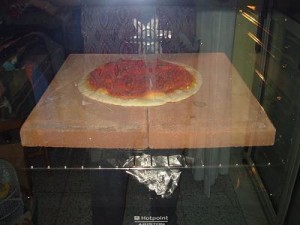
The advice: The major problem encountered in cooking pizza in the oven at home, is when you bake the pizza. Opening the door of the oven, we will have the total dispersion of accumulated heat, to obviate this drawback, we suggest you use a baking stone on the oven floor, that in this way be able to maintain high temperatures even when we open the oven to bake pizzas. Remember to always bring your oven to maximum temperature, that usually is reached after having left it on for at least 15 minutes.
**** I do not have a baking stone, how do i? Easy, take four classic brick and place them on the bottom of your oven gas. You will get the same results.
At what temperature to cook the pizza
In electric ovens, ventilated and not, the pizza should be cooked in the upper part close to the heating elements: also in this case the board to use the refractory stone to maintain high temperatures even after the oven will be open. For pizza pan, the first part of the cooking should be made on the bottom of the oven, then ultimarla top, near the resistances.
Electric furnaces and gas is useful to add a bowl with hot water before baking: serve to confer humidity at’dough.
As regards the mono-pizza ovens with refractory stone to high temperature or even ovens that can cook in 5 minutes, the pizzas are inserted already stuffed and ready to be cooked.
The secrets of pizza: tomato
Tomatoes most suitable for the pizzas are the peeled San Marzano or similar type. To get the maximum flavor, shall be broken up with your hands and then seasoned with salt, extra virgin olive oil and basil.
Council to prepare the tomato topping even a day before cooking the pizza. In this way, the filling will acquire even more flavor, but you'll have to take care to keep it well covered in the refrigerator to prevent contamination with other flavors.
The secrets of pizza: mozzarella
Always buy the fresh mozzarella, cut into slices or julienne for a round pizza, but remember that for the one in the pan is always better to cut à julienne.
You should always use fresh mozzarella not only for its taste but also to ensure that the pizza is not present never dry.
The buffalo mozzarella should only be used when cooking is short (type wood stove or oven to 400 ° C), because otherwise the pizza would be too watery. For ovens that do not reach high temperatures should always be placed at the last minute.
At what temperature to cook the pizza
The secrets of pizza: vegetables
Blanch the vegetables slightly and ripassatele in a pan with a drizzle of extra virgin olive oil. Add them on pizza or tomato before baking, coprendole with mozzarella. If the oven does not exceed 300 ° C, add them at the last minute.
The grilled vegetables instead should be laid on the pizza always exits the furnace and hot product , leaving unchanged all the culinary properties.
The secrets of pizza: salami
One trick to avoid the salami from drying out and lose flavor: place them under the mozzarella, in this way it preserves the flavor and quality. Exceptions are obviously those recipes that specify explicitly add the sausages out of the oven.
The secrets of pizza: flour
One thing to know about the W flour is that the lower the value of W, shorter leavening. But first you need to understand what to indicate the The: is l 'unit of measure of the strength of the flour, that is, the pressure resistance of the kneaded flour.
For the bread the choice of suitable flour part by W 180 until you get to 380, depends on the result you want: varieties are so many, from the basic model (bread "boor", the one with a lot of crumbs) up to a blown.
In the preparation of cake it is best to use a flour with W 180-200 for a soft dough type Genovese, whereas it can reach up to W 260 a dough for crispy.
For pizza, the choice is from W 180 (for a short leavening) a W 350 (for a medium-long leavening also using dl fridge).
If you do not know the value of W or is not mentioned on the label can be mixed 70% flour 00 classical 30% of flour Manitoba and certainly can not go wrong.
The secrets of pizza: water
During the winter season, the water must be at room temperature. D'estate, instead, advice to use very cold, but remember to dissolve the yeast in a little water at room temperature and add it directly to the flour. If tap water is too limestone used the mineral.
Baking a pizza on baking stone
If you want to know more about the pizza, is available to you our course of professional pizza maker Online. Many videos at your disposal, many useful to read, in no time you are become an expert pizza maker. The course is online, so you can read and learn new things when you have time available. Our pizza school will issue a certificate pizzaiolo. To know more, click here.
Which pizza has never experienced the pain of a sunburn? Indoors, or at work, just a little distraction to procure a small burn with iron, hot water, plate, pots on the stove or with the oven. A burn, even if small, should be treated right away to prevent damage to the skin. Burns oven and stove: here's how to ease the pain and what absolutely must not do.
Sunburn from oven and stove
For sunburn of oven and stove here is how to do with the immediate remedies DIY.
The first thing to know is that the remedies of emergency household are valid only for small abrasions, slight, superficial and restricted to very limited areas and especially for the less sensitive parts of the body.
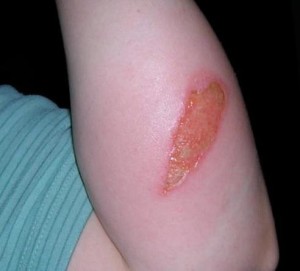
The mild sunburn have redness, burning and erythema, with bubbles that cause itching. The most severe burns, instead, occur with larger bubbles and color more pronounced.
The first thing to do in case of sunburn is to put the part under a stream of cold water, Also taken from the fridge, until the pain subsides and to create an analgesic effect.
When the temperature of the injured party starts to lower the sting is attenuated and phase begins healing. The burn is totally defenseless and are prone to various infections. It is therefore recommended the application several times a day creams with a high concentration of zinc oxide, that in addition to soothe avoid the proliferation of bacteria.
For more serious burns is better to apply antibiotic ointments and in any case it is always better to repair the part with the sterile gauze until the wound is healed.
In pharmacy exist dressings ready (He was io use) that release emollients and moisturizers.
The advice in the most
For sunburn of oven and stove must know how to do and above Don'ts. E’ well not use oil, album, potatoes, flour and talc because slow down the healing process and also are not sterile substances. Do not ever put the wound in contact with the ice because it could create additional injury due to the temperature difference. At Last, it is best not to scratch the blisters, but eventually crack them with sterile needles and disinfect them with non-alcoholic beverages.