SILVIO CICCHI:Male Age:54 A restaurant-trained Executive Pizza Chef, he is the author of upcoming book of pizza recepy: “PIZZA e FANTASIA“, you can download it for free registering on this site. He currently resides in Spinetoli (ITALY) with his cats and dogs. Specialized in Business start up – Pizza dove – Pizza courses – Art of pizza.
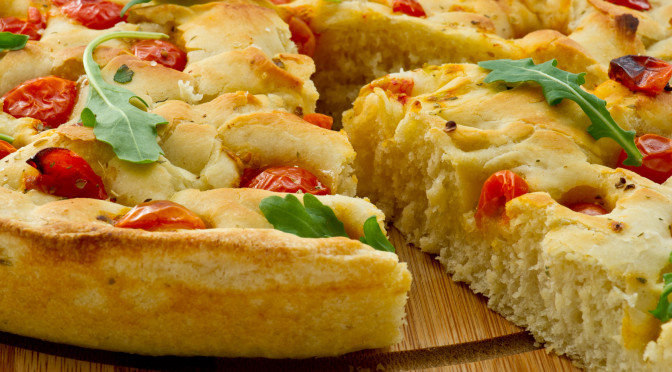
The potato focaccia, in appearance very similar to a white pizza, is an easily affordable in many ovens of the peninsula.
Potato focaccia
Very soft inside, and crisp in its external. Its softness is due to the fact that among its ingredients include potatoes, very easy to work, usually high, and risen to perfection, given the time much shorter than the rising focaccia normal. I propose this recipe for all those who want to try at home, its success is guaranteed, and can be accomplished in a few hours. It is usually seasoned with extra virgin olive oil and aromatic herbs, like thyme and rosemary, but they are now in many a season with the classic ingredients of the pizza dish: tomato, mozzarella, anchovies and so on, and so forth.
INGREDIENTS FOR 8 PEOPLE
Flour 00 500 g
Small potatoes with white paste2 the 3 potatoes
Warm water150 ml
Fresh yeast15 g
Extra virgin olive oil 3 spoons
Sale2 pinches
Rosemary Enough
PREPARATION
Boil the potatoes in boiling water for about 20 minutes, then peel and mash. Let them cool completely.
In a large bowl sift the flour.
Add the mashed potatoes, salt and 3 tablespoons oil.
Dissolve yeast in a cup with warm water and add the resulting liquid little by little into the bowl with the flour. Begin to knead in the bowl to combine ingredients, then transfer the dough on a pastry board and continue to knead for ten minutes, until a soft ball and elastic
Let rise for about 1 and h 30 minutes or until the dough has doubled.
After rising time, divide the dough into 4 parties to spread in 4 baking trays in a thickness of about 1,5 cm and with 20 cm diameter.
Remember to grease the pans with plenty of extra virgin olive oil. Let the dough rise again lying in trays for just under an hour.
Before baking the cakes, season them to taste such as adding herbs, a pinch of salt and a little oil.
COOKING
Preheat oven ventilated 220 °C, then bake the cakes and cook for about 20 minutes.
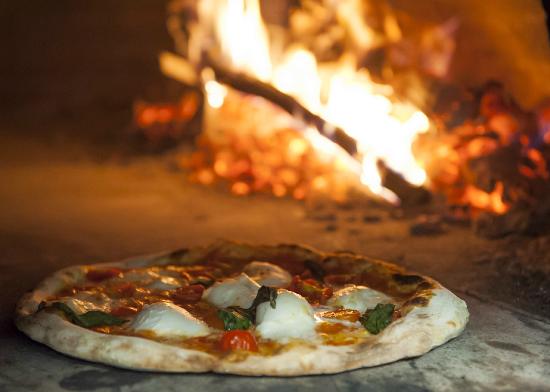
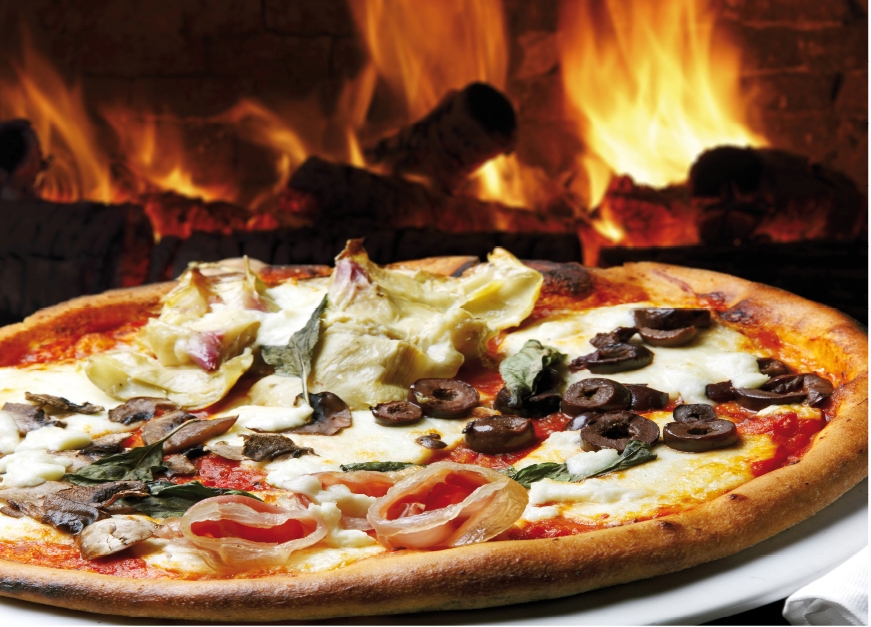
When we think of pizza, jumps immediately to mind the classic shape of the pizza maker with shovel in hand, before a wood oven.
Basically, exist 2 main methods for cooking pizza, in the oven or in the classic wood stove. By the time we learned to associate the pizza with the ancient cooking tool that is the wood oven, which gives excellent results and adds to our pizza the characteristic smell of burning wood.
Unfortunately, alas not enough to cook a pizza in a wood burning oven to ensure a good result. Then, in this tutorial, I will try to explain how to cook a pizza, and what are the most used types of cooking, which basically are two: with electric oven or with a wood stove.
Start by talking about our dough, which when fired undergoes major physical changes: Increases its volume, form an outer crust and a crumb inside, its surface is colored and develops aromas and perfumes; loses moisture and weight. What has changed between then a type of furnace and the other?
OVEN
Electric ovens for pizza have a cooking chamber of rectangular height and depth variable; the soil is made of refractory material and the heat is developed by means of electrical resistors placed on the floor and on the roof of the oven. La pizza tonda al piatto cuoce quindi a diretto contatto con la pietra refrattaria ricevendo calore per conduzione diretta, or through contact between stone and dough, by radiation of heat transmitted from the walls and the sky of the oven and by convention, ie displacement of hot air and water vapor inside the cooking chamber.
I forni elettrici hanno in genere due gruppi di resistenze, upper and lower, independently controllable: this allows the baker to manage the heat coming from the base of the furnace and from the upper part of the same to have a uniform cooking also according to the type of pizza in cooking.
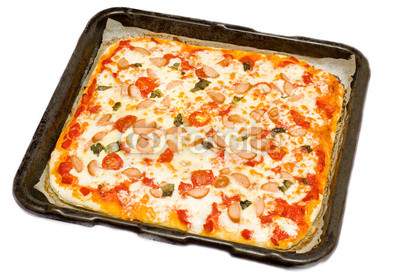
Nel caso della pizza cotta in teglia ad esempio, the heat must get more from their base to be conducted through the metal of the pan and transmitted to dough. In round pizza dough receives heat from the bottom, as placed in direct contact with the refractory stone, then the heat will get more from heaven oven. Un moderno forno elettrico riesce a cuocere pizze alla perfezione permettendo un’ottima gestione della cottura che avviene in modo più uniforme rispetto a un forno a legna, with better drying of the product.
THE OVEN
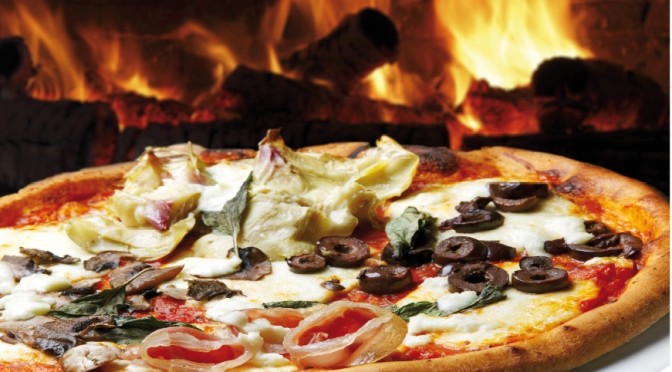
The ovens have been used since antiquity for baking bread and later for pizza and focaccia. Un forno a legna classico è costruito interamente in materiale refrattario; the cooking chamber has a stone base surmounted by a refractory time always to which is connected a drain for the fumes. The fire is almost always positioned at the center in the first starts to then be moved to one side during the entire cooking of the dough. The baking stone on the basis, as well as all the time, are heated by the fire while maintaining a constant temperature thanks to storage secured by the building materials. The pizzas cooked in direct contact with the stone receiving heat from the same cooking and also for radiation and convention thanks to the heat of the flames present in the cooking chamber.
The cooking time of an oven wood are reduced compared to an electric furnace: cooking with flame allows short time which may vary from a few minutes up to 60 secondi scarsi delle pizze napoletane cotte con fiamme molto forti per garantire la caratteristica consistenza morbida della pizza. UNA PIZZA COTTA NEL FORNO A LEGNA POSSIEDE UN PROFUMO DIVERSO RISPETTO A UNA COTTA NEL FORNO ELETTRICO. The charm of the wood stove is the presence of the flame that burns in the firing chamber and the aromatic components developed by the various types of wood used in cooking. A wood-fired pizzas often presents a scent different from a crush in oven, but about the actual cooking process will be the same in respect of the four physical phenomena reported at the beginning of article. Il forno a legna ha una gestione più difficile rispetto all’elettrico: the flame should be followed carefully and the pizza must be turned in their cooking to ensure a homogeneous heat exposure. A baker with experience makes a difference in a pizzeria: often in fact find pizzas burnt or cooked in a non-homogeneous thanks to a management of the oven is not optimal.
OTHER TYPES OF OVENS
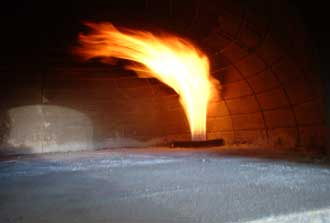
Photo of a classic wood oven, but gas powered.
HELPFUL HINTS FOR WHO DOES THE PIZZA OVEN IN CLASSICAL GAS OR ELECTRIC HOUSE
When you make pizza at home, the biggest problem often encountered is given by the dispersion of heat, ie the oven due to the large door opening, never reaches the high temperatures required for the cooking pizza. Everything is solved by inserting in your oven a sturdy baking stone, as shown above. Preheat the oven well with the stone inside the max, then bake your pizza. With this little trick, immediately you will get good results.
The Fried Pizza Recipe and Preparation chef Silvio Cicchi.
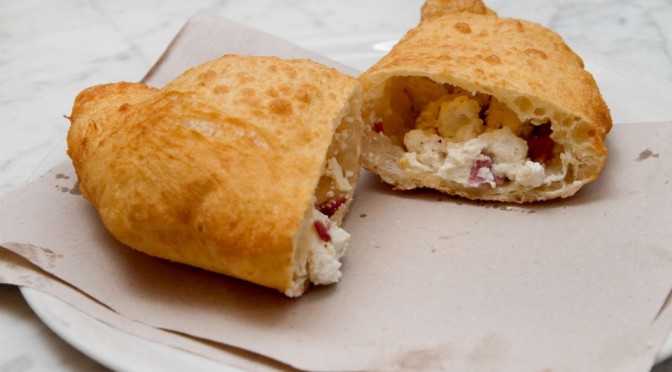
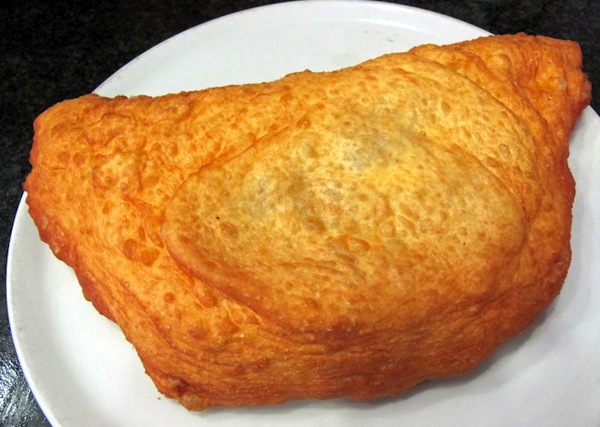
This article will introduce the fried pizza-recipe and preparation. The fried pizza is widespread throughout southern Italy, it seems that in every region takes a name and a filling different!! The origins of fried pizza dates back to World War II, when the streets of Naples women frying the simple pizza dough, but without any filling or seasoning. Considered a variant of the classic pizza poorest, with the passage of time was filled in different ways, until you get to today's recipe, which provides a delicious filling of ricotta cheese and salami. The pizza dough fried, quite similar to that of classical Neapolitan pizza, discs of dough are filled with ricotta, pepper and bits of fat or lard. In some regions is planned to be used smoked cheese, or buffalo mozzarella. The discs of dough are stuffed, folded crescent like a calzone, and fried in boiling seed oil until the browning. Today the most popular and classic pizza fries is undoubtedly stuffed with ricotta cheese and salami.
We all have tried at least once to make pizza at home, obtaining different results, satisfied by some
product obtained, Delicious, nice to see, with carefully selected ingredients, it happens sometimes, that our pizza
just as we can not imagine the.
It does not seem the case to be discouraged, becoming a po’ attention and following our advice, you can get
excellent results even in your own home.
In the many years that I do this work, I have acquired the necessary experience and knowledge, it happened to me many times
taste the homemade pizza made from various more or less good, and I tried to incorporate into this article a list
defects encountered, so that you can face and solve during the preparation of your home made pizzas
your.
This is a list of the most common mistakes:
Strong smell of yeast
The use of flour are not suitable for the pizza dough
An incorrect use of’dough in the preparation of pizza
Misuse of ingredients “aqueous” such as tomato, i funghi, mozzarella.
Strong smell of yeast
The fear that all those who prepare pizza at home is as follows: But if he does not rise, what we eat for dinner? that figure we make with the guests? and then…..down with a lot of yeast!!!! Of course so your dough will rise for sure, but there will be negative consequences for your pizza. This is what could happen: You will have a very rapid rising, but this prevents the maturation of the, while feasting your pizza, you will have a strong smell of yeast dough and pizza, a little fragrance and a subtle aroma,the dominant fragrance will only be that of lievito.La your pizza will be spongy, and will tend to dry out and crumble easily.
Solve this error easily, testing yourself the right amount of yeast for every kilo of flour is really a few grams, as you can see from our basic recipe for pizza, Start by using only half a cube of yeast, then in the next mixes usatene less, until you find the right balance between your mixing times and the proper maturation.
The use of flour are not suitable for the pizza dough
When you decide to make pizza at home, do not always have the right flour to prepare the pre impasto.Magari there remained half bag of flour that you used to make sweets lately and decide to use that.
The results obtained may be:
A rising very rapidly, A little mass consistent, during the preparation of the dough you will notice that it tends to tear and
a bucarsi, after cooking the dough may be too friable. The reason for this is due to the low amount of gluten contained in farina.La his weakness he will puncture during processing, also oppose little resistance to the gases that are formed during the leavening and then will swell rapidly.
With these features you will get, as in the case of too much yeast, a little pizza fragrant and aromatic and always for the
same reason: little time for the aging and the formation of aromatic compounds to rapidly rising.
To avoid this problem you need to choose meals with higher content of glutine.Sommariamente can be said to use
flour “0” and maybe check that the protein content reported in the nutrition labeling is at least 10%.
An incorrect use in the preparation of pizza dough
When we prepare the pizzas to our house and we spread the dough, of any shape we want to get, inexperience often we happen to work it too long, or maybe reimpastarlo again to be able to start again.
The dough must never be treated so, and reacts in this way:
Will become increasingly more difficult drafting balls
becomes hard and too elastic to roll out
In the cooking step, the pizza does not swell and remains compact and biscuit
All this because manipulating the dough too long we have the loss of gas rising and reaction to gluten
which hardens the dough.
The loss of leavening gas is due to the repeated crushing: crushes and rischiaccia, gases that made
l’impasto gonfio, soft leavened and escape out by returning the mixture almost to the starting volume and leaving much gluten compatto.Il, that we can imagine as consisting of tiny strings, reacts to the manipulation “curling”. The consequence, to the level of sensation under the hands, a dough is harder, more elastic and therefore more difficult to roll out.
We must do everything possible upstream to prevent this problem is present:
prepare the balls with care, avoiding mash too, accompanying the movement only with the palms of your hands. A
ball that has maintained its right amount of gas is the seed to be able to obtain a regular shape and texture
let stand corrected balls, in order to make him shoot a bit’ rising to “reload” il gas perduto
the rest also helps the gluten and gluten ridistendersi and a relaxed facilitates greatly the spread because it decreases the elasticity
learn how to write good crushing the ball as little as possible with your hands. “Ok, but however if for any reason I have to manipulate the dough does not have much hope?”
If also using all the attention, you are forced to reshuffle or having to manipulate a ball, convenient to proceed by reforming the ball and letting it sit for at least 10 minutes (maybe if you have more to spread, leave this for last), always to give a minimum of time to gluten to relax and the rising of a little reform’ di gas.
Overdo the tomato or other toppings aqueous
Cook a pizza to perfection means being able to lose water to the ingredients of seasoning, bathrooms without the dough and remains there to make the puddle.
When you are unable to obtain this result:
the pizza does not cook well in the central disk, remains rubbery and semicruda in the layer just beneath the dressing
excess water remains over the pizza and the cut bathes all
water can leak from cooking pizza and go on the cooking surface, soiling and scorching
It is a serious flaw, because it compromises the success of pizza, making it inedible even in the worst cases.
The more risk you run with the use of:
very watery mozzarella, not drained
very watery tomato, not drained
too much tomato
too many mushrooms
oven temperature too low
When I was a boy, I often listened to my grandparents telling me their life experiences. Among all those stories, some I was impressed in the mind, one of these on
all said that their time when a girl married, carried with it the “dowry” composed of things at once precious, sheets, ascigamani, valuables and yeast. This sourdough was handed down from generation to generation, was nothing more than a piece of bread dough that was given as a symbolic wish for the new generation. At that time there were no cubes of yeast that we find today in all
supermarkets.
The new family was kneading the dough piece “mother” with new flour and water, and the new bread leavened, and so they produced the new bread. With each new batter came off a piece of dough that would serve the next time. And so on for months, age, decades, from family to family and from generation to generation.
I've always been fascinated by the rise and this story, who knows that this has not affected my decision to make the pizza. To think that in that piece of pasta, fruit of doughs, reshuffles and still reshuffles, There are fragments of everyday life of the years, of past centuries, is incredible. Among all the grains of flour quell'impasto, if it still conceals someone's grandmother or great-grandmother.
For all those people who got married recently and have not brought with them the “dowry”, I suggest these few tips to create a home a new strain of yeast.
The result: the fragranza, the scent, the complexity and articulation aromatic, the pleasure of self-production of the same yeast.
How do you get?
It can be done as in the families of the past: tear off a piece from someone who uses it, so you are assured that he is alive, active and operating immediately.
But the departure from flour and water, it is undeniable, is most satisfying and enables you to tune into direct contact with the yeast.
It will become your yeast, equal to that of any other, because the son of a different environment for each. The exact opposite of standardization of yeast.
Try starting it simple:
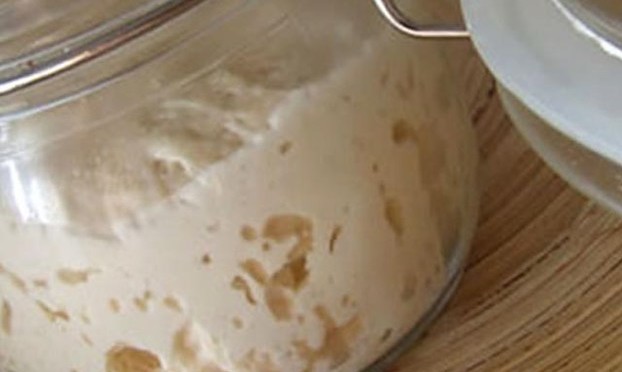
kneading in a cup of water and 50g spotless 100 flour
mixture is creamy, cover with a damp dish, so that it is protected, but not sealed, leave in a draft-free and a little 'warm, ideal for me is a corner
a kitchen cabinet. Make every day what happens: within two or three days should show signs of fermentation (bubbles and lifting, sour smell). If it does not, becomes more likely the appearance of mold and should try again, perhaps choosing a meal you will find it less raffinata.Quando fermented, will mean that we have enjoyed some microorganisms, our yeast, that will need nurturing.
And you be providing him: kneads the embryo of yeast with more water and fresh flour, to obtain a mixture of similar consistency to the first and away again in the shelf.
This is called "refreshment".
Follow the above steps two or three times, always check that the smell is sour without exaggeration, the formation of bubbles and the dough is puffed up a bit '.
Now that the yeast (o lievito madre) reacts more quickly and that you just need a day or less to ferment the refreshment you can try to make us a first mixture of bread.
Until you're sure of its effectiveness, it will be better not to use it for pizza.
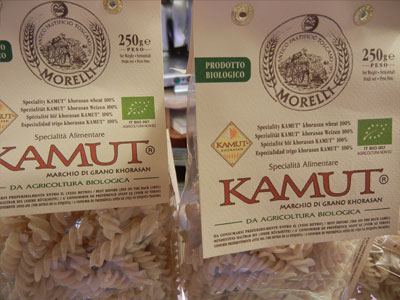
E’ a real scandal who says that Kamut is a wheat!!!!!!
Kamut is not a type of wheat but a registered trademark, I'll explain the concept: Kamut is not the name of a grain, but the trademark (Coca Cola eat McDonalds) that the company Kamut International ltd (K.Int.) placed on a wheat varieties registered in the United States under the symbol QK-77, cultivated and sold as a monopoly and famous around the world thanks to a marketing unprecedented.
Who calls this variety the grain of the pharaoh because it is said that the seeds have been found around the middle of the last century in an Egyptian tomb and sent in Montana, where after thousands of years have been awakened and multiplied. The wheat produced and sold under the brand name Kamut grown in the United States (Montana) and in Canada (Alberta e Saskatchewan), under the strict control of the Quinn family, owner of the company K.Int.; in Italy imported only by authorized companies and then milled only from mills authorized. All products bearing the mark are prepared and sold under license from K.Int and under the control of the Kamut Enterprises of Europe. The very effective marketing that underpin the success of Kamut has relied on three aspects: the fascinating legend of its discovery, the attribution of exceptional nutritional qualities and an alleged compatibility for those who are intolerant to gluten. Wheat or Wheat big eastern Khorasan or call him by his name handed down, common and public, while Kamut is a fancy name recorded species (Wheat swollen subsp. turanicum) belonging to the same genetic group of durum wheat: presents a culm (stem) high even 180 cm; did the caryopsis (berry) naked and very long, more than that of any other wheat; originating in the zone between Anatolia and the Iranian Plateau (Khorasan the name of a region of Iran); Over the centuries it spread on the shores of the eastern Mediterranean, where small-scale companies survived the expansion of hard and soft wheat. The invention of the commercial discovery So, to find the Khorasan in Egypt was not (and is not) really need to disturb the tombs of the Pharaohs; not to mention that a type of Khorasan was (and, is still marginally) also cultivated between Lucania, Sannio and Abruzzo: la Saragolla, not to be confused with a homonym improved varieties of durum wheat obtained from a cross and recorded nal 2004 by the Company Manufacturers Seeds of Bologna.
Also do not forget that the germination of wheat decade after a few decades, as are the ideal storage conditions. All this leads to the recognition in the history of the alleged discovery of Khorasan / Kamut only a fanciful invention commercial, elaborated to stimulate the desire for something pure, ancient and exotic. E, onor to vero, la Stessa K.Int. has distanced himself from the legend that, prealtro, now no longer needs to be encouraged. From the data available today, source of public and private, between the elements of greater characterization of Khorasan there are a high protein content, in general higher than the average of the hard and soft wheats, and good levels of beta-carotene and selenium; for the other components and nutritional quality, there are no substantial differences compared to other wheats. Gluten: non è can not afford not povero Bisogna, indeed, clarify that, as each wheat, Khorasan is unsuitable for feeding celiac, because it contains gluten (e non è can not afford not povero, come, little responsibly, some advertising claims or suggests) and it contains an extent greater than that of common wheats and numerous varieties of durum wheat.
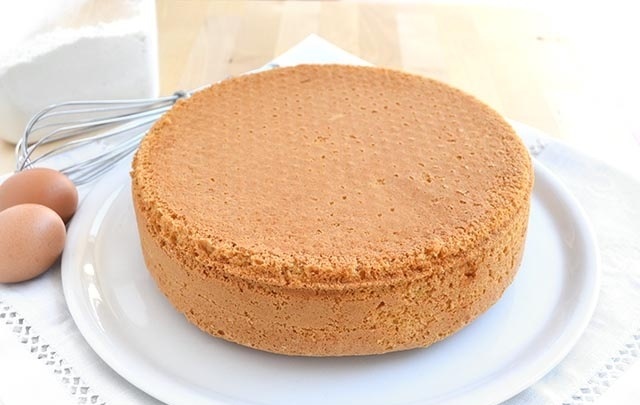
It is said that the recipe for sponge cake was born from a Genoese cook, some Giobatta Carbona, that in the middle of the eighteenth century, being in Spain with the marquis Domenico Pallavicini, invented this pasta dough soft and extremely sweet; this dessert was called Pâte Génoise, in honor of the roots of Liguria. From this mixture, they developed a more simple called Sponge, so named to honor the Spanish court that he had praised so much praise.
The sponge is part of the classic recipes of the Italian cuisine, is the best base used for cakes and is used in particular for cakes stuffed.
For this recipe you will need to use a mold 24 cm which can be cut into three layers.
Ingredients for a mold 24 cm:
6 eggs
6 tablespoons of boiling water
250 gr di zucchero
300 grams of flour 00
lemon peel
1 sachet of baking powder
Preparation time: 15 my
Cooking time: 35 my
Total time: 50 my
How to make sponge cake
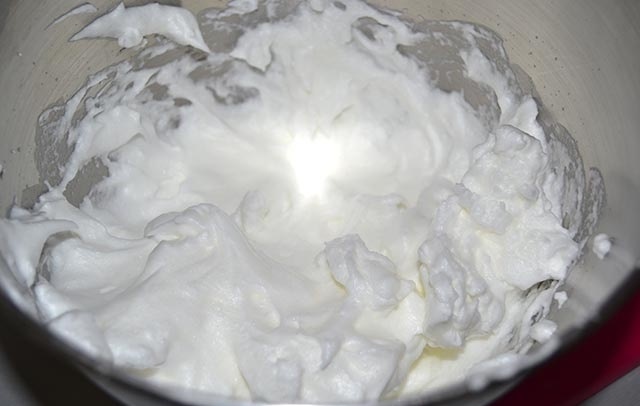
Separate the yolks from the whites and whip them until stiff.
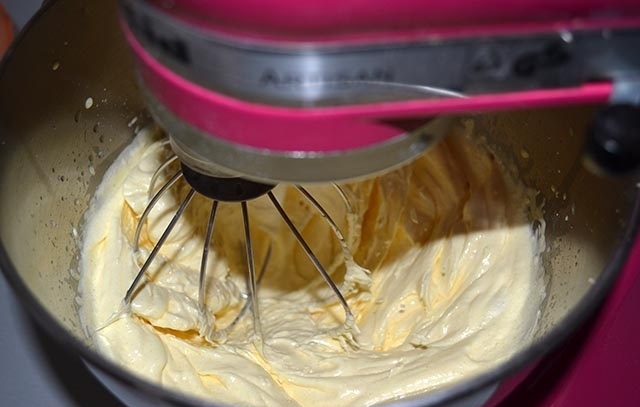
Whip the egg yolks with 6 tablespoons of boiling water.
Add the sugar and the lemon rind finely grated continuing to mount until the mixture appears light and fluffy.
Add the flour and baking powder slowly continuing to mount.
Finally add the egg whites until stiff and fold into the mixture with a spoon from the bottom to the top.
Grease and flour a mold and then pour the mixture inside.
Bake in a preheated oven at 180 ° C for 40 minutes.
Remove the sponge from the mold and let it cool before using it as the recipe.
Note: When you buy bread for this recepy, look for soft Italian or French bread, not a hearty baguette.
About the author: Silvio Cicchi is an Italian Executive Chef Pizza,he likes to explore the science of home cooking, expert of pizza dove and Baking.
Every recipe published on my site is tested, tasted and approved. Never miss a recipe again by following our multilanguages site.
Add us to your favorite sites
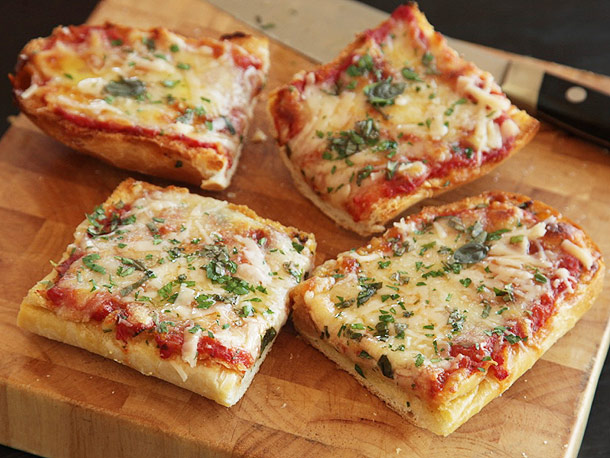
The Best Pizza bread italian recepy
About This Recipe
YIELD: Serves 3 to 4
ACTIVE TIME: 30 minutes
TOTAL TIME: 30 minutes
THIS RECIPE APPEARS IN: Silvio Cicchi recepy book “Pizza & Fantasy” Downolad it for free from this site.
RATED:*****
Ingredients
3 tablespoons butter
4 tablespoons extra-virgin olive oil, divided
4 cloves garlic, finely minced
pinch red pepper flakes
1/2 teaspoon dried oregano
1/4 cup minced fresh parsley or basil leaves, or a mix
Salt
1 large loaf French or Italian bread (see note above), split half lengthwise and crosswise
1 (14.5 ounce) can crushed tomatoes
8 ounces freshly grated whole milk mozzarella cheese
2 ounces grated Parmigiano-Reggiano Procedures
1
Adjust oven rack to upper position and preheat oven to 250°C. Heat butter and 3 tablespoons olive oil in a medium saucepan over medium-low heat until butter is melted. Add garlic, pepper flakes, and oregano and cook, stirring occasionally, until garlic is softened but not browned, about 2 minutes. Stir in half of parsley/basil and a big pinch of salt. Remove from heat.
2
Place bread cut-side-up on a clean work surface. Using a rimmed baking sheet. Place bread on top of rimmed baking sheet. Using a pastry brush, brush half of garlic/butter/oil mixture evenly over cut surfaces of bread, making sure to get plenty of bits of garlic and aromatics. Set aside.
3
Add tomatoes to remaining garlic/butter/oil mixture in pan, stir to combine, increase heat to medium, bring to a simmer, then reduce heat to maintain a bare simmer. Cook, stirring occasionally, until rich and reduced, about 15 minutes. Season to taste with salt.
4
While sauce cooks, spread 1/4 of mozzarella evenly over surface of bread and transfer to oven. Cook until cheese is barely melted, about 8 minutes. Remove from oven and set aside until sauce is cooked.
5
Spread sauce evenly over bread, then spread remaining mozzarella on top of sauce. Transfer to oven and bake until cheese is melted and just starting to brown, about 10 minutes. Remove from oven and immediately sprinkle with Parmigiano-reggiano, remaining parsley/basil, and remaining tablespoon extra-virgin olive oil. Allow to cool slightly and serve.
Bon Appetite!!
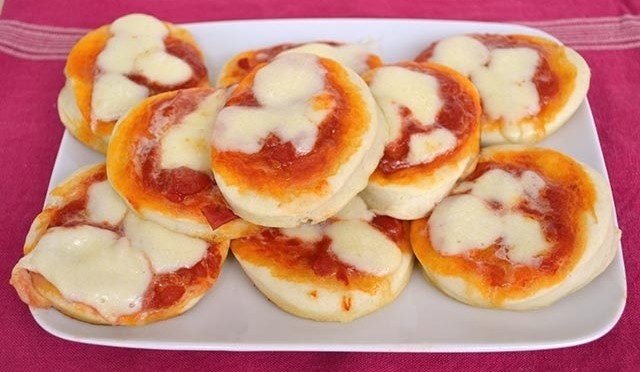
Here is a recipe very easy to accomplish. If you are in doubt about what to prepare for an aperitif, or what to prepare for a birthday at home, this recipe is right up your alley. We speak of the famous pizzas, smaller than normal, such as those found in pastry or in bars. Ideal to prepare for a buffet or a birthday party,but also to serve during a simple dinner.
Ingredients for 20 pizzette:
500 grams of flour 00
250 ml of water
20 g of yeast
25 gr di burro
1 spoonful of sugar
1 tablespoon of extra virgin olive oil
1 teaspoon of salt
250 gr of peeled tomatoes
200 gr of cream
sale
oil
Preparation time: 20 my Cooking time: 15 my Total time: 35 my + 1 now rising
How to make pizza
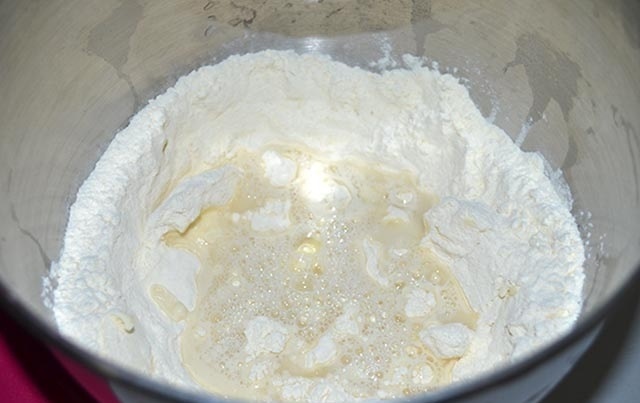
Put the flour in a bowl, make a hollow in the center and place the yeast, sugar and water at room temperature.
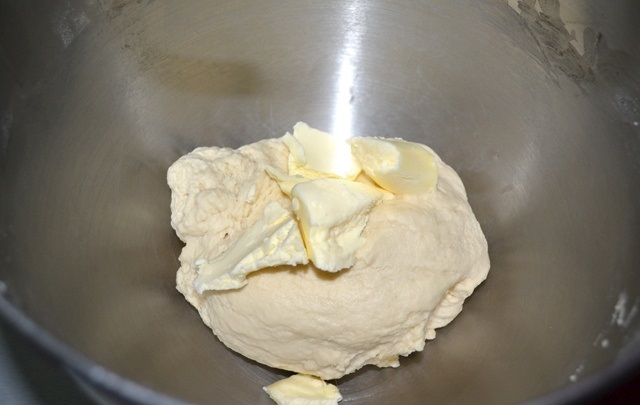
Knead well until the dough mushy then add the softened butter, oil and salt.
Transfer the dough out onto a work surface and knead for a long time until the dough is smooth and homogeneous.
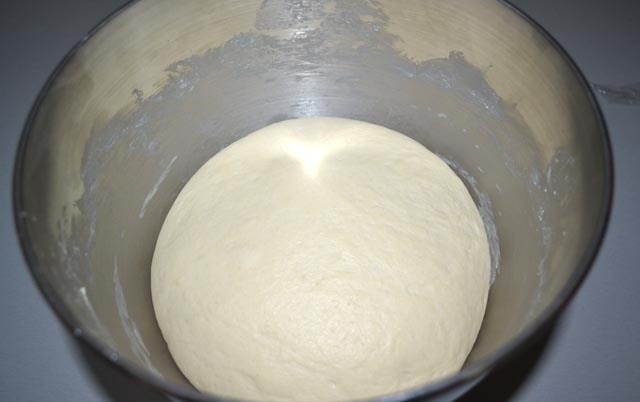
Form a ball, put it back in a bowl and let rise for 2 hours.
After 2 hours the dough has doubled in volume.
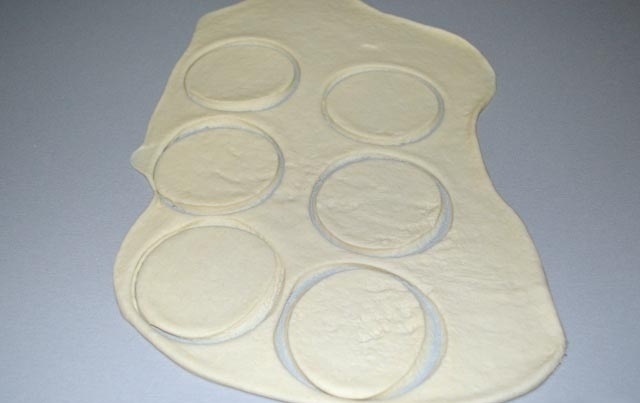
Now resume the dough with a rolling pin and roll out the dough to about 3mm and cut on the mouth of a glass many circles.
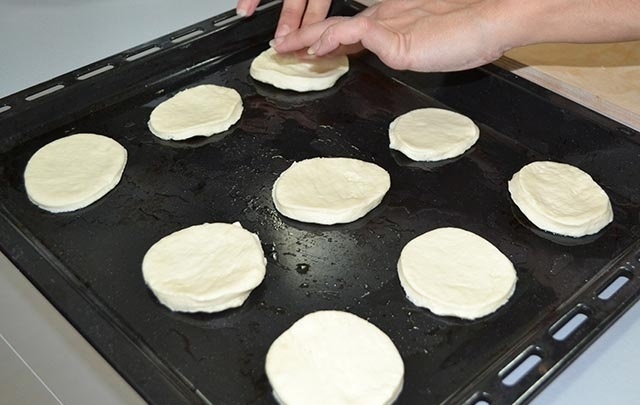
Oil the baking sheet and place the pizzas obtained.
Season with tomato (past and flavored with oil, sale e basilico) and bake at 200 degrees in preheated oven.
After 5-7 minutes, Remove the pizza from the oven, add the diced mozzarella and bake again for another 5 minutes.
How to make a good pizza at home in a fast and good
Silvio Cicchi Executive Chef Pizza
Many times we happen to have last minute guests and there is nothing better than a good pizza prepare. With this simple recipe, in less than two hours you will be able to prepare for them a good pizza that is good, too, rewarding, and for those who are not very experienced / a, very easy to achieve.
In a bowl, pour the flour 00, add the yeast previously dissolved in a bowl with lukewarm water,mix everything, slowly add warm water to help you make the dough that eventually will result’ be soft and not appiccicoso.aggiungi salt and olive oil, Work the dough until the dough will result’ omogeneo e ben compatto, At this point put it in a bowl and cover with plastic wrap and a blanket and keep it in a warm place for about 1 now, the dough will double its volume.
We turn on the oven to maximum and prepare the pans lightly oiled or parchment paper. In the meantime, prepare the mixture rises in a container tomatoes with a little oil and salt and oregano in small containers and all the ingredients that most’ you like, olive, frankfurter, tuna onions, capers, anchovies, mushrooms, grilled vegetables in oil or, of course prepare the mozzarella into cubes.
After rising time we take a piece of dough and flatten with a rolling pin and facciomo thickness that we prefer taking into account that a swell in the oven with tomato pochino.Condiamo and with what’ that most’ we like, and finally we put the mozzarella. Bake for 15 minutes, if neccessario after 10 subsidiaries minutes cooking. When you are ready for the oven and let rest before cutting to 5 minutes so that the sauce settles, then proceed to cut and what to say…Bon Appetite!